
A website redesign stakeholder approval guide is a structured framework that defines who approves what, when, and how during a web project. Without it, projects stall, budgets blow out, and teams rebuild work that was already signed off. A typical redesign runs 2–4 months and requires a 15–20% budget contingency for unplanned costs. That timeline only holds when stakeholders know their roles from day one. The core players usually include an executive director, a marketing lead, a development director, and in some cases a board. Getting them aligned early is the single biggest factor in whether a redesign ships on time.
What is a website redesign stakeholder approval guide?
The term "stakeholder approval guide" is an informal label for what project managers formally call a stakeholder approval framework or decision rights matrix. Both phrases describe the same thing: a documented system that maps who holds authority over each type of decision in a web project. Using the formal term builds credibility with executives and procurement teams who expect structured governance language.
Stakeholder misalignment is the highest risk factor for redesign failure. That claim is not abstract. A marketing lead who wants brand consistency, a sales director who wants lead capture forms above the fold, and an SEO manager who wants URL structures preserved will each pull the project in a different direction. Without a documented framework, those conflicts surface late, after design work is already done.

The approval framework solves this by forcing clarity before the first wireframe is drawn. It answers three questions: Who decides? Who advises? Who just needs to be informed? Every stakeholder falls into one of those three buckets.
Who are your key stakeholders and how do you identify their roles?
Stakeholder identification is not a one-time meeting. It is a deliberate mapping exercise that produces a living document called a stakeholder register.
Start by listing every person or team with a stake in the outcome. Then sort them into three categories:
- Decision-makers: Hold final sign-off authority. Typically the executive director or CEO for budget, and the marketing lead for brand and content.
- Advisors: Provide expert input but do not hold veto power. Development director, SEO manager, and UX lead fall here.
- Visibility stakeholders: Need to stay informed but do not participate in approval decisions. Board members and department heads often sit in this group.
Two role frameworks work well for this exercise. The RACI model (Responsible, Accountable, Consulted, Informed) is the most widely used. The DARC model (Decide, Advise, Recommend, Commit) is newer and better suited to fast-moving digital projects because it separates advice from recommendation. Either framework forces you to assign one accountable owner per decision, which prevents the "everyone approves everything" trap.
Mapping stakeholder priorities early reduces bottlenecks and improves accountability throughout the project. The practical output is a one-page matrix that lists each major decision area (brand, content, technical architecture, SEO, launch date) alongside the accountable owner and the consulted parties.
Pro Tip: Ask each stakeholder to write down their top three success criteria for the redesign before the kickoff meeting. Collect those answers anonymously and share the compiled list with the group. Conflicts surface immediately, before they become expensive.
How to establish an effective stakeholder approval process
A clear approval process defines decision rights before disagreements arise. Without it, every contested decision escalates to the executive level, which creates a bottleneck that slows the entire project.
Build the process in four steps:
- Set final sign-off authority. One person holds the final yes or no on each major deliverable. Name that person explicitly in the project charter. Do not assign this role to a committee.
- Define decision boundaries. Specify which decisions can be made at the team level without escalation. Color palette adjustments, copy edits, and image swaps should not require executive review.
- Establish tiered approval levels. A tiered approval structure matches decision impact to the appropriate authority level. Low-impact decisions (button color, font weight) stay with the project manager. Medium-impact decisions (page layout, navigation structure) go to the marketing lead. High-impact decisions (budget changes, launch date shifts) escalate to the executive director.
- Formalize escalation paths. Document the exact steps for resolving disagreements. Who is contacted first? What is the response SLA? How is the final decision recorded?
Seeking universal consensus on every decision is the fastest way to kill a website project. The 'disagree and commit' model is more effective: team members voice objections through a defined channel, the decision-maker listens, then makes a call. The team commits to executing it regardless of personal preference. This model speeds up launch timelines without suppressing legitimate concerns.
Pro Tip: Write a one-sentence decision authority statement for each major project phase and paste it at the top of every status document. "For this phase, [Name] holds final approval authority." Stakeholders stop lobbying each other when the authority is visible.
Best practices for communicating with stakeholders during a redesign
Communication timing matters as much as communication content. Sending updates too frequently creates noise. Sending them too rarely creates anxiety and last-minute interference.
The most effective approach ties communication to project milestones rather than calendar dates. A milestone-based schedule looks like this:
| Milestone | Communication type | Stakeholder group |
|---|---|---|
| Kickoff | Live briefing + written summary | All stakeholders |
| Wireframe review | Async review with deadline | Decision-makers + advisors |
| Design mockup sign-off | Formal approval gate | Decision-makers only |
| Content review | Structured feedback period | Marketing lead + advisors |
| Pre-launch QA | Final sign-off checklist | Decision-makers only |
Formalized feedback cycles with deadlines prevent open-ended review periods that drag on for weeks. Set a specific date by which feedback must be submitted. Feedback received after that date is logged for the next iteration, not the current one.
Structured dissent channels prevent groupthink. A "red team" review assigns one stakeholder the explicit role of critic for each major deliverable. Their job is to find problems, not approve the work. This surfaces real concerns in a controlled way rather than letting them emerge as last-minute objections.
Well-planned communication triggers that match the right message to the right stakeholder at the right moment improve both approval speed and stakeholder satisfaction. Tailor your updates: executives want budget and timeline status, while technical advisors want to see spec documents and change logs.
Common pitfalls in stakeholder approval and how to avoid them
Most redesign projects fail at the approval stage for predictable reasons. Recognizing them early is the most practical form of risk management.
- Approval paralysis: Too many voices with unclear authority creates endless feedback loops. The fix is a documented decision rights matrix, applied from day one.
- Budget overruns: Hidden costs like content migration and unplanned SEO fixes are the most common source of budget pressure. A 15–20% contingency is not optional. It is the standard for any professionally managed redesign.
- Misaligned deliverables: Failing to document each stakeholder's success criteria early leads to work that looks great but misses business goals. Collect those criteria before design begins, not after.
- Unavailable decision-makers: A project stalls when the one person who can approve a deliverable is unreachable. Define backup approvers for each decision-maker at the start of the project.
- Scope creep: New requests arrive at every review cycle. Log them in a change request register and evaluate them against the original brief. Accept only what fits the current scope and budget.
The pattern behind all five pitfalls is the same: ambiguity. Every one of them is caused by something that was not defined clearly enough at the start. The best practices for website redesign governance all point back to the same discipline: document everything before the work begins.
How to document and track stakeholder approvals
Approval documentation is the operational backbone of a successful redesign rollout. Without it, "I thought we agreed on that" becomes the most expensive phrase in the project.
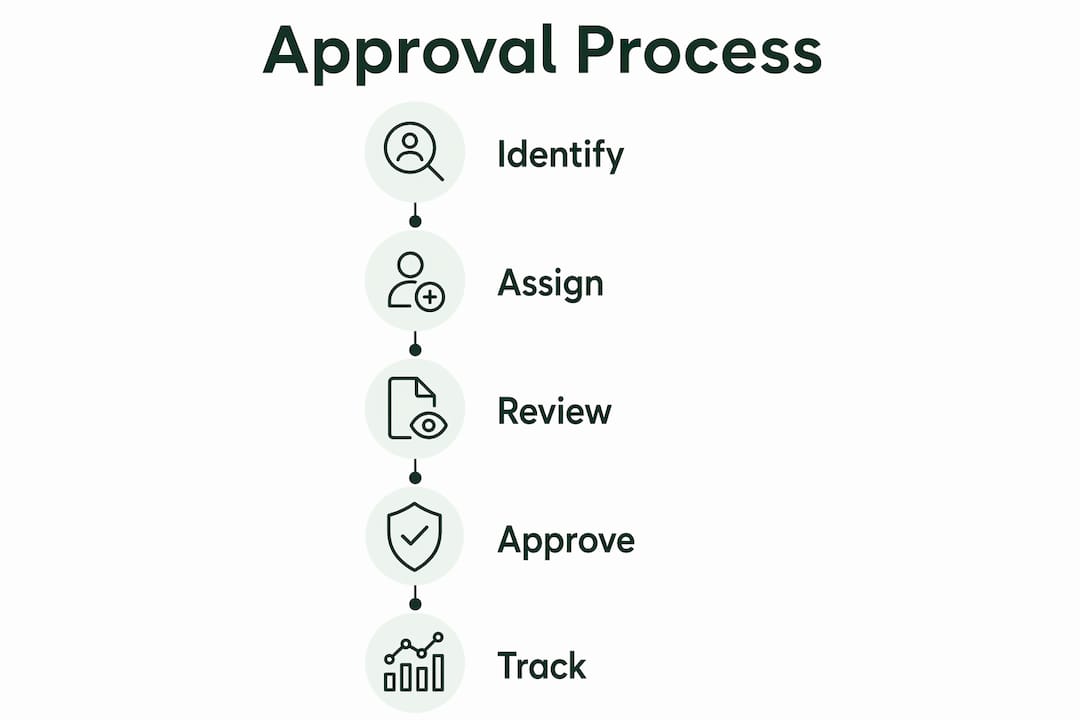
Use a tracking system that records every approval with a timestamp, the name of the approver, and any conditions attached to the approval. A shared spreadsheet works for small teams. Dedicated project management platforms handle this at scale. The format matters less than the discipline of using it consistently.
Version management and documented approval tracking keep stakeholders accountable and prevent scope creep from eroding the original brief. When a stakeholder requests a change after sign-off, the timestamp record shows exactly what was approved and when. That record protects the project manager and the client equally.
Plan review cycles at four key moments: after wireframes, after design mockups, after content population, and before launch. Each cycle has a defined input period, a feedback deadline, and a formal sign-off step.
Pro Tip: Send a brief written summary after every approval meeting. List what was approved, what was deferred, and what the next decision point is. Copy all relevant stakeholders. This single habit eliminates most "I didn't know that was decided" disputes.
Post-launch, document stakeholder feedback in a structured log and assign each item to either the current sprint or a future iteration. This keeps the team moving without ignoring legitimate concerns.
Key Takeaways
A website redesign succeeds when decision rights are documented before work begins, feedback cycles have hard deadlines, and one named person holds final authority at each project phase.
| Point | Details |
|---|---|
| Define decision rights early | Assign one accountable owner per decision area before the first wireframe is drawn. |
| Use tiered approval levels | Match decision impact to the right authority level to prevent executive bottlenecks. |
| Set feedback deadlines | Formalized review periods with hard cutoffs prevent open-ended delays. |
| Budget for overruns | A 15–20% contingency covers hidden costs like content migration and SEO fixes. |
| Document every approval | Timestamped records with approver names prevent scope creep and resolve disputes fast. |
What I've learned from watching redesigns stall at the approval stage
The most common cause of redesign failure is not bad design. It is a project that launched without anyone agreeing on who gets the final say. I have seen projects with excellent UX work sit in review for three months because two executives disagreed on the navigation structure and neither had been designated as the tiebreaker.
The "disagree and commit" model is not a compromise. It is a discipline. It requires the project manager to create a formal channel for objections, listen to them seriously, and then make a documented decision. The team executes that decision. The objection goes on record. This is faster than consensus and more honest than ignoring dissent.
Early stakeholder mapping also reveals something most project managers overlook: the difference between who has formal authority and who has informal influence. A board member with no official role in the approval process can still derail a launch if they raise concerns at the wrong moment. Map informal influence alongside formal authority. Build communication touchpoints for both.
The best approval processes feel almost invisible when they work. Stakeholders get the right information at the right time, decisions get made cleanly, and the project ships. That outcome does not happen by accident. It happens because someone did the unglamorous work of writing down who decides what, before the first design file was ever opened.
— jacopo
How Talivo can reduce friction in your next redesign
A structured approval process gets stakeholders aligned. Talivo handles the execution side, so your team spends less time rebuilding and more time reviewing.

Talivo rebuilds an existing site in minutes by reading the current URL and generating a modern, mobile-first version that retains all original content and images. For businesses without a live site, Talivo converts a Google Maps listing directly into a full website. The step-by-step process is built for project managers who need a fast, presentable draft to bring into stakeholder review, not a months-long build cycle. When your approval framework is solid and your site is ready to show, the path from kickoff to launch gets significantly shorter. See what Talivo builds at talivo.tech.
FAQ
What is a stakeholder approval process in a website redesign?
A stakeholder approval process defines who holds authority over each project decision, when reviews occur, and how disagreements are resolved. It prevents delays caused by unclear roles or competing priorities.
How long does a typical website redesign take?
A standard redesign takes 2–4 months, depending on project scope and stakeholder complexity. Budgets should include a 15–20% contingency for unplanned costs.
How do you gain stakeholder buy-in for a website redesign?
Collect each stakeholder's success criteria before the project begins, assign clear decision rights using a RACI or DARC framework, and tie communication to project milestones rather than arbitrary calendar updates.
What causes approval paralysis in web projects?
Approval paralysis results from too many voices with unclear authority. Assigning one accountable decision-maker per deliverable and adopting a "disagree and commit" model resolves it.
What should a website redesign checklist include for approvals?
A solid approval checklist covers a stakeholder register, a decision rights matrix, tiered approval levels, feedback deadlines at each milestone, and a timestamped sign-off log for every major deliverable.